“WordPress isn’t dying. What’s dying is the perception of it as a ‘site builder for dummies.’ And that’s the best thing that could have happened to it.”
Why is everyone burying WordPress again?
Every year, the same old song. “WordPress is dead,” “WordPress is the past,” “why WordPress when there’s Wix/Framer/AI.” I’ve been hearing it since 2015. Then again since 2018. Then since 2021. And now in 2026. Yet WordPress is still alive. And not just alive — it powers over 40% of the web.
But I won’t hide behind statistics. Numbers are one thing; working with the platform every day is quite another. Over 18 years in development, I’ve watched WordPress outlive dozens of “killers”: Joomla, Drupal, Squarespace, Wix, Webflow, and now the AI builders. Every time, the script is the same — hype around a new technology, predictions of WordPress’s death, and… silence a year or two later.
So let’s skip the panic headlines. Let’s talk honestly: what has really changed, what is dying, and what is only beginning to live.
What actually died (and that’s a good thing)
The old “buy a $50 theme, throw in some content, collect the money” model is dead. And I’m genuinely glad it is.
The era of mass-produced template sites, slapped together in Elementor by drag-and-drop with zero understanding of architecture — that era is over. Not because Elementor is a bad tool, but because the market matured. Clients got smarter. They no longer want “just a website” — they want a tool that works for their business.
I see it daily in the requests I receive. Three years ago, a typical request was: “Make us a beautiful website.” Now it’s: “We need a system that integrates with our CRM, automates order processing, and scales as traffic grows.” See the difference?
And here’s the interesting part: those who built their careers on templates and copy-paste really are in a tight spot. Because AI builders already churn out simple brochure sites faster and cheaper than any freelancer. But that’s not the death of WordPress. That’s the death of one particular way of working with it.
Gutenberg and FSE: the revolution that finally happened
When Gutenberg appeared in 2018, the community split down the middle. Half screamed “this is a disaster,” while the other half insisted it was the future. I was among those who saw the potential but understood the implementation would take time.
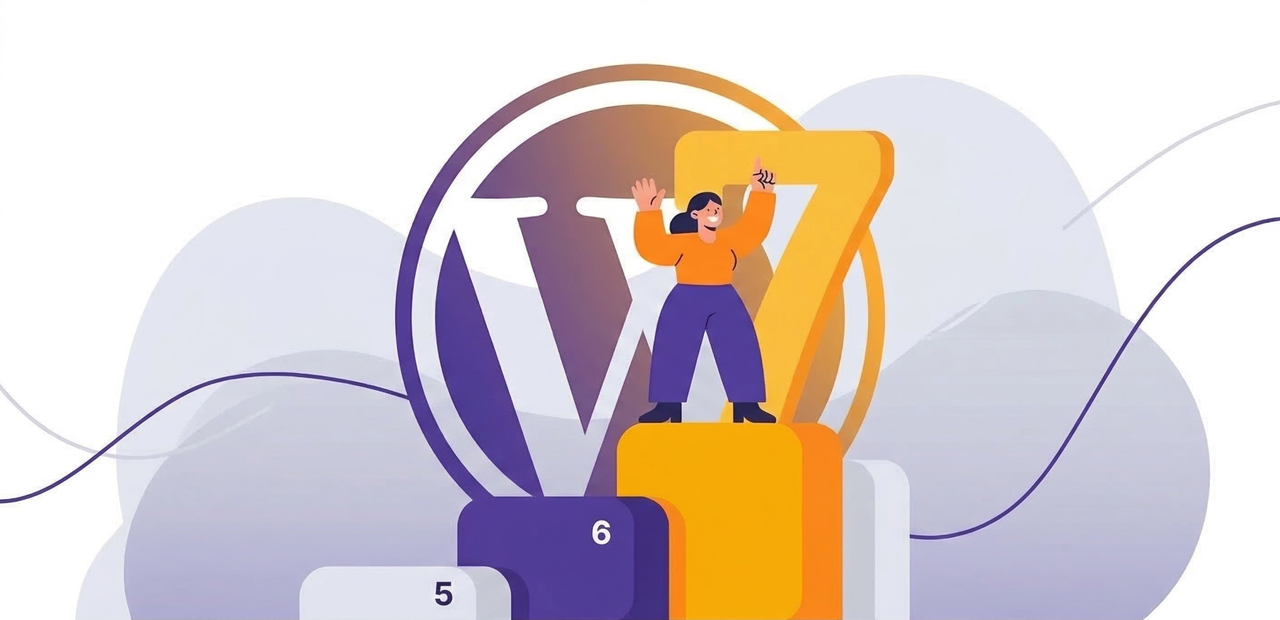
Now, in 2026, I can say it with confidence: Gutenberg has matured. Full Site Editing (FSE) and block themes are no longer an experiment — they’re an industry standard. Serious clients, especially on the American market, spell it out right in their specs: native block development, no third-party page builders.
Why? Three reasons:
Performance. Block themes generate clean, lightweight code — none of the megabytes of CSS and JS that page builders drag along. The site runs faster, and that means Core Web Vitals, SEO, and conversion.
Standardization. Configuration in JSON, styles in CSS, markup in HTML. A clear, predictable structure. Any developer can pick up a project and find their way around it in hours, not weeks.
AI compatibility. And this is perhaps the most interesting part. Gutenberg’s structured blocks are perfect for working with AI agents. It’s far easier for AI to analyze, modify, and generate code in a block architecture than to untangle chaotic, old-school PHP templates. WordPress has effectively become an AI-friendly platform — and that’s a tremendous competitive advantage.
Headless WordPress: where the real game begins
If site builders and AI are taking over the simple sites, where does that leave WordPress? The answer: complex, custom solutions. And headless architecture is exactly where WordPress opens up in a whole new way.
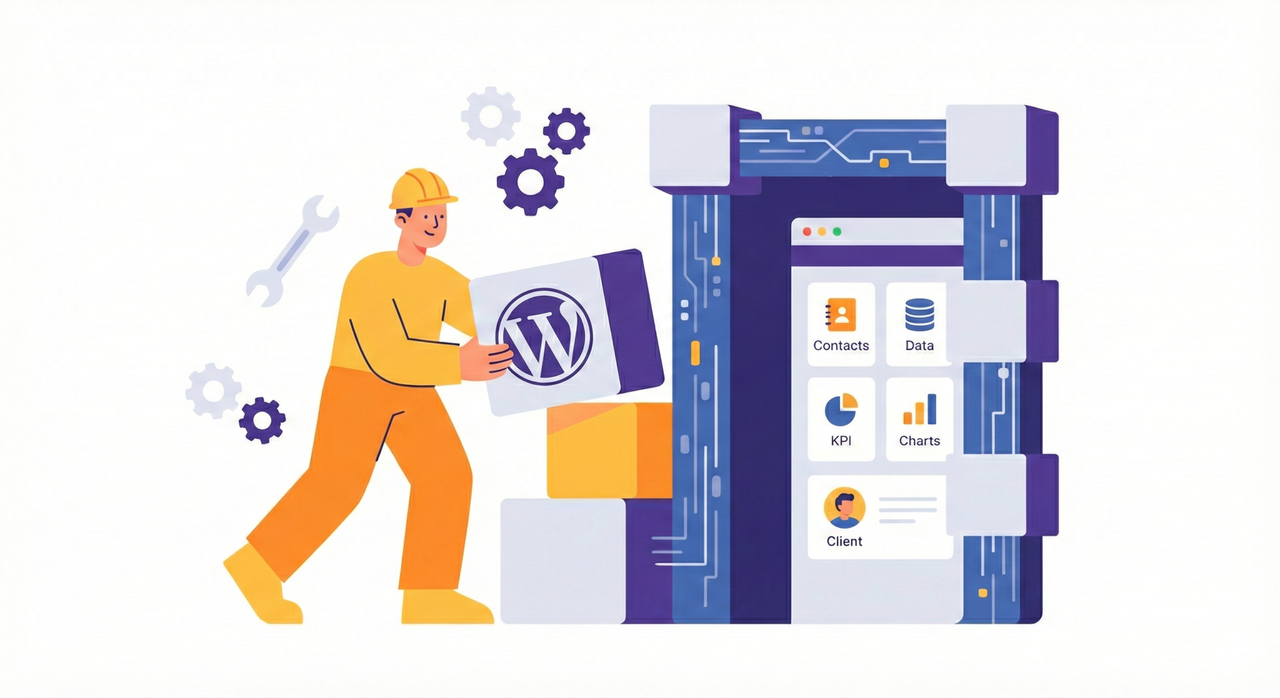
The idea is simple: WordPress stays on as the backend — the powerful, familiar admin panel clients have grown used to over the years. The frontend is built on modern tech: React, Next.js, Vue, whatever you like. Between them sits REST API or GraphQL.
I’m already working on projects where WordPress plays exactly this role — a Content Hub, the heart of a content ecosystem. Content is created and managed in a familiar interface, then pushed out to the website, the mobile app, the marketplace — wherever it needs to go.
And you know the best part? Clients love it. They don’t want to learn a new CMS. They want the familiar WordPress admin — with a modern, blazing-fast frontend. Headless delivers exactly that.
The barrier to entry has gone up — and that’s okay
There’s a flip side to this transformation. To work with WordPress at the level the market now demands, you need to know a lot more than before.
The minimum stack for a modern WordPress developer in 2026:
- PHP — a deep understanding of the core, writing plugins, working with hooks and filters
- JavaScript (React) — for building custom Gutenberg blocks and headless frontends
- REST API / GraphQL — for connecting WordPress to external systems and applications
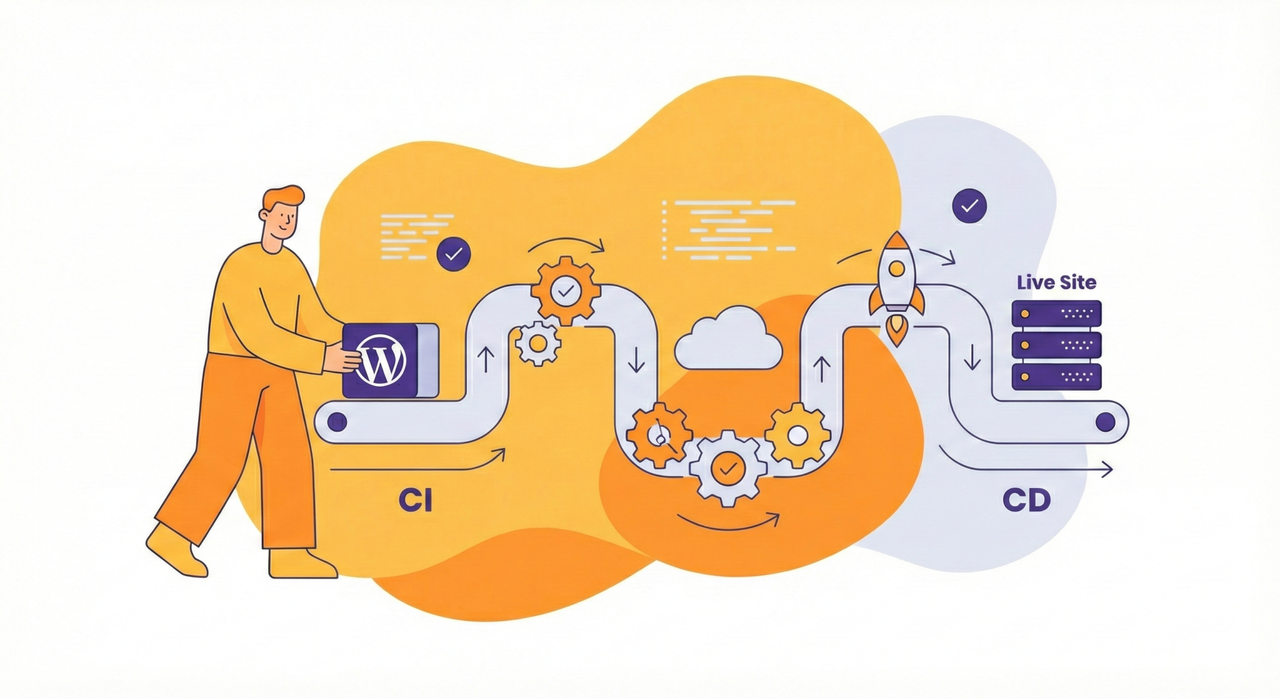
- DevOps basics — CI/CD, containerization, server configuration
- AI integrations — the ability to plug AI tools into your workflows
This is no longer a matter of installing a theme and setting up a menu. This is engineering. And that’s exactly why I’m confident in the platform’s future — complexity creates a barrier to entry, and a barrier to entry creates value for those who clear it.
The market has stratified. On one side, AI and site builders serve the simple-site segment. On the other, qualified engineers and studios build complex systems. The middle ground, where the copy-pasters used to live comfortably, is shrinking. And that’s healthy evolution.
Legacy: millions of sites aren’t going anywhere
There’s another aspect rarely discussed in the context of “WordPress’s death.” Millions of sites built over the last 10-15 years keep running. They need support, updates, migrations, refactoring. Business owners aren’t going to rewrite everything from scratch in Next.js — they need someone who understands their current infrastructure.
This is a huge niche. But let me be honest: it’s a maintenance niche, not a growth one. If your plan is to service old sites and never learn anything new, it will work for another few years. But that’s a path to stagnation, not growth.
The smartest strategy is to use legacy projects as a stable income base while investing time in the modern stack. That’s exactly what I do with my clients: I maintain their existing solutions and gradually offer them an evolution — optimization, a move to block themes, integrations with new services.
AI isn’t killing WordPress — it’s making it stronger
This deserves its own section. Many people fear AI as the “killer” of WordPress. I see the opposite.
AI tools already help me in my daily WordPress work: generating code, refactoring, creating content, automating routine tasks. My educational project edu.kaplia.pro is a living example of how AI accelerates the creation of quality content while leaving the developer in the role of architect and reviewer.
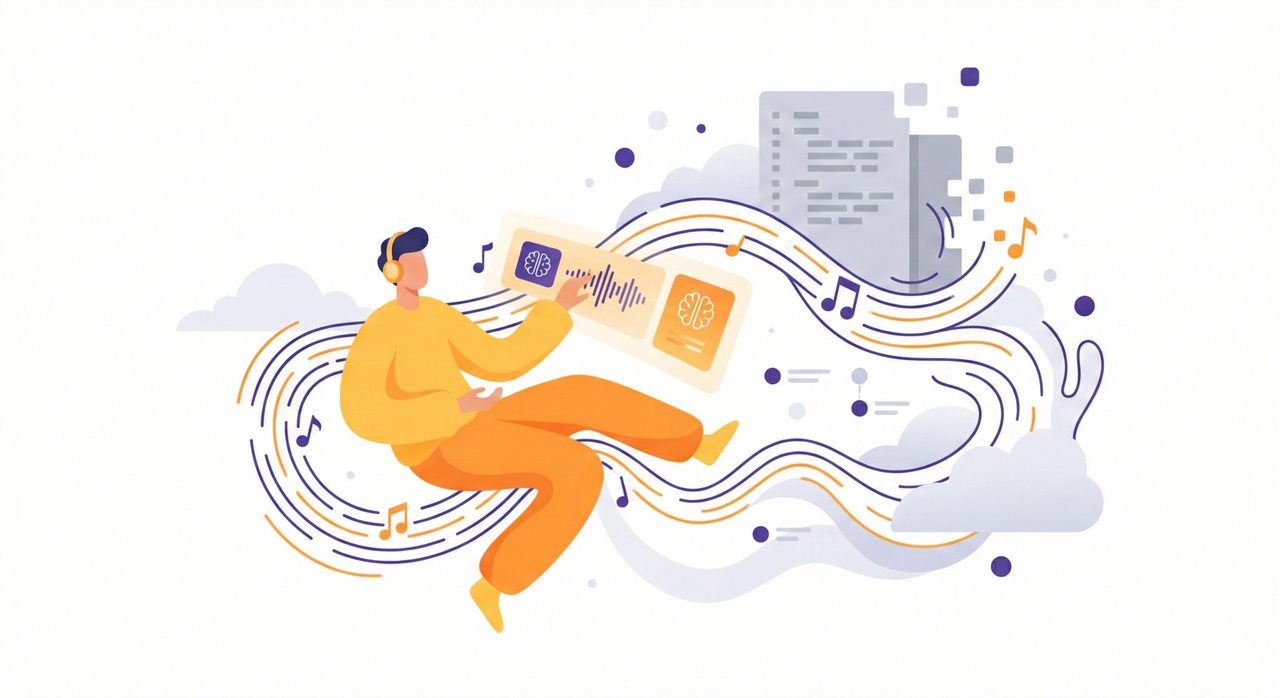
With its open architecture, REST API, and plugin ecosystem, WordPress is an ideal platform for AI integrations. Hooking up a GPT-based chatbot, automating meta tag generation, building an intelligent content recommendation system — all of it is easier to do on WordPress than on most alternatives.
AI doesn’t replace WordPress. AI turns it into something more than just a CMS.
My forecast: WordPress in 2027-2030
I don’t like making long-range forecasts in IT — the field moves too fast. But some trends are already fairly obvious:
The block ecosystem will become dominant. Third-party page builders will gradually fade into niche solutions. Gutenberg will become the primary way to build WordPress sites.
Headless will go mainstream. Not for everyone, but for serious projects that need performance and flexibility, it will be the standard approach.
AI will become built-in. Not as a plugin, but as part of the core. Automatic image optimization, intelligent content editing, AI assistants right in the admin panel.
The community will remain the main advantage. No site builder has an ecosystem like this — developers, plugins, themes, documentation, contributors. You can’t replicate that artificially.
Why I keep betting on WordPress
People sometimes ask me: “You’re an experienced developer — why not switch entirely to React/Next.js/whatever’s trendy?” The answer is simple: I do work with those technologies — through WordPress. Headless, custom blocks, API integrations — it’s all modern JS paired with WordPress’s powerful backend.
WordPress gives me what no single framework can: a mature ecosystem, an interface clients actually understand, a time-tested content management architecture, and the flexibility for any custom solution.
On WordPress, I build complex eCommerce systems with unique business logic, corporate portals with dozens of integrations, multilingual projects with intricate SEO architecture. And WordPress handles it. Not because it’s perfect — there are no perfect tools. But because it’s flexible enough to adapt to any task.
The bottom line
WordPress isn’t dying — it’s growing up. And so are the demands on the people who work with it. The era of easy money from template sites is over — and that’s not a tragedy, it’s natural evolution.
The platform’s future lies in headless architecture, the block ecosystem, AI integrations, and complex custom solutions. For engineers willing to learn and adapt, this is a golden age. Demand for quality WordPress development isn’t falling — it’s transforming. And those who transform with it will stay in demand for a very long time.
Because stability in IT isn’t standing still. It’s moving fast enough to keep pace with a platform that never stands still.